Peter Foldes (1924 – 1977)
Biography
The Hungarian-British director, screenwriter, animator, and painter Peter Foldes (Péter Mihály Földes) was born in 1924 in Budapest and passed away in 1977 in Paris.
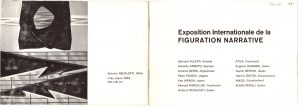
He had been drawing since the age of three and was recognized for his draftsmanship from his teenage years. He studied art and design at the school of the pioneering sculptor István Örkényi Strasser in Budapest, and from 1942 at the Budapest Academy of Fine Arts, where he became an assistant to the painter István Szőnyi during his third year of studies. In 1946, he traveled to Paris for three months, where he encountered abstract art for the first time; it made such an impression on him that he did not touch a paintbrush for 18 months. Immediately after, he settled in England to study art history at the Courtauld Institute of Art, and in 1948 at the Slade School of Fine Art, when he began painting abstract-surrealist works. At the Courtauld Institute, he met his future wife, the British animator Joan Clifford Collins, with whom he co-created a series of animated films. In 1956, he settled in Paris, where during the 1960s, he worked for the Research Service of the French Radio and Television (ORTF). Following this, under the influence of art critic Gérard Gassiot-Talabot, he turned towards figurative narrative painting.
He created approximately sixty animated films. A pioneer of the medium, his notable accolades include: ‘Animated Genesis’ (1952): Won the Special Award for Color Technique at the Cannes Film Festival and received a BAFTA Special Award in 1953. ‘Hunger’ (1973/1974): A milestone in computer animation, it won the Jury Prize for Best Short Film at the Cannes Film Festival and received an Academy Award nomination for Best Animated Short Film in 1975. For the same film, he, Nestor Burtnyk and Marceli Wein, were awarded with Technical Academy Award (1997).
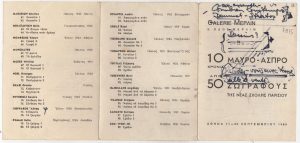
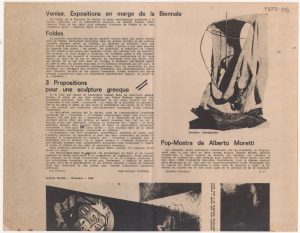
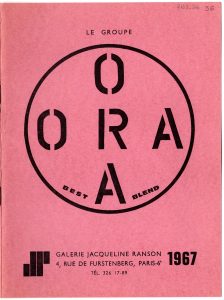
He presented his paintings in highly-received solo exhibitions in London (e.g., Gimpel Fils Gallery 1948, Hanover Gallery 1953) and Sydney (National Art Gallery 1956), as well as in group exhibitions in Paris, Zurich, Athens, and the 1964 Venice Biennale. In his youth, due to his Jewish heritage, he participated in the exhibitions of the National Association of Hungarian Jewish Artists (OMIKE).
Today, his portraits are held in the permanent collections of the Tate Gallery and the Courtauld Gallery in London.
Other work from Peter Foldes (1924 – 1977)