Kanellis Orestis (1910 – 1979)
Biography
The painter Orestis Kanellis was born in Smyrna in 1910 and passed away in Athens in 1979.
From Mytilene, where he sought refuge after the Asia Minor Catastrophe in 1922, he moved to Athens to study medicine. However, he soon abandoned his medical studies and left for Paris, where from 1930 to 1932 he attended open academies, most notably the Grande Chaumière, while also apprenticing under G. Gounaropoulos (it was there that he devoted himself to painting without ever completing formal, systematic studies).
Influences from Picasso, but primarily from Soutine and Derain, can be detected in many of his works. His subjects are mostly anthropocentric, with an emphasis on a near-expressionistic rendering of children’s figures. Concurrently, he engaged in landscape painting, depicting olive groves and seascapes, poetically and lyrically capturing the essence of the Mediterranean landscape with tendencies toward Fauvism and Expressionism. His work became widely acclaimed by art critics, particularly during the post-war period. Major poets, such as Andreas Embirikos and Odysseas Elytis, wrote about his painting.
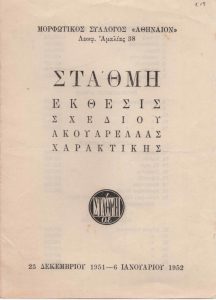
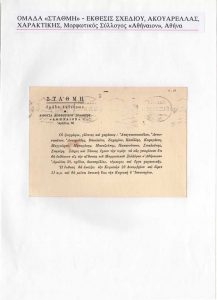
He was active within the ranks of the Stathmi and Techni art groups, published art articles in newspapers and magazines, and participated in solo and group exhibitions both in Greece and abroad, including the Panhellenic Exhibitions (1916–1974), as well as numerous other international events in New York, Lugano, and Brussels. He represented Greece at the Venice Biennale in 1934 and the Alexandria Biennale in 1954. A retrospective exhibition was organized at the National Gallery in Athens in 1978.
Other work from Kanellis Orestis (1910 – 1979)