Kantounis Nikolaos (1768 – 1834)
Biography
The painter Nikolaos Kantounis was born in Zakynthos in 1768, where he passed away in 1834.
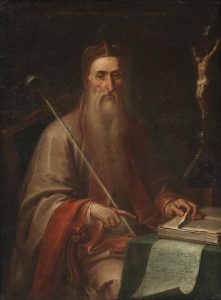
He was self-taught in painting, although he apprenticed under hagiographers such as Ioannis Korais (or Kastrinos), Nikolaos Koutouzis, and the scholar Antonios Martelaos. In 1786, he was ordained a deacon, and in 1788, a priest at the Church of Evangelistria in Zakynthos. He was a member of the Filiki Eteria (Society of Friends). Due to his revolutionary activity, he was exiled for six months in 1821 to the Monastery of Kyra, southwest of Cephalonia, where he crafted some of his most remarkable works: The Last Supper, Pilate’s Decision, The Washing of the Feet, and The Agony in the Garden.His themes consisted of religious works, secular scenes, and portraits.
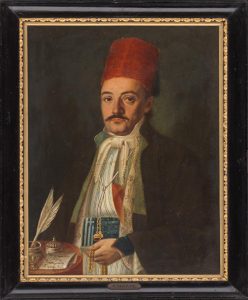
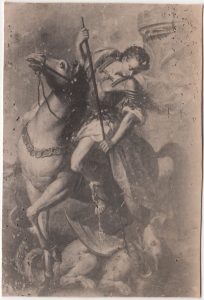
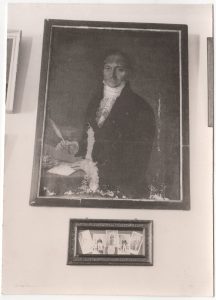
He created icons as well as extensive religious compositions for numerous churches in Zakynthos and Corfu. As a characteristic representative of the Heptanese School, with clear influences from classical Western European painters, Italian Mannerism, and Flemish artists regarding his typological, color, and formalistic choices, he rendered religious subjects with sentimentality. He also painted portraits with a capacity for psychographic penetration, making him considered one of the founders of the genre. The shaping of volumes and the distribution of light and dark fields reveal the influence of the Italo-centric tradition, while some of his works challenged the audience’s horizon of expectation.
Other work from Kantounis Nikolaos (1768 – 1834)