Stamos Theodoros
Biography
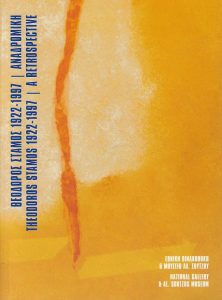
The painter Theodoros Stamos (Theodoros Stamos) was born in New York in 1922 and passed away in Ioannina in 1997.
An Americn-Greek artist, he won a scholarship as a teenager to the American Artists School, where he studied sculpture. From 1937, he dedicated himself to painting.
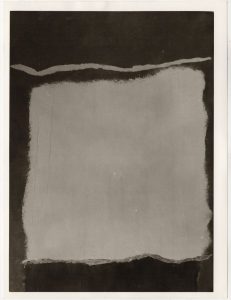
A pioneer of the Abstract Expressionism movement, he developed a poetic, lyrical idiom. He was one of the original and youngest abstract expressionist artists working in New York during the 1940s and 1950s. He was influenced by M. Tobey, M. Rothko, and W. Baziotes. His first paintings are composed of biomorphic shapes, organic ontological entities moving within an enigmatic space, with clear influences from Surrealism. In 1950, he became a member of “The Irascibles” art group in New York, which included Jackson Pollock, Willem de Kooning, and Mark Rothko. In 1963, he began the series “Sun Boxes”, while from 1970 and for two decades, the “Infinity Fields” dominated his work in multiple versions, emerging from his travels to Greece, Italy, and Palestine.
He taught at Black Mountain College in North Carolina in 1950, and from 1950 to 1954 at the Hartley Settlement House in New York. In 1955, he began teaching at the Art Students League of New York. He served as a visiting professor at Columbia University in 1956 and as an Artist-in-Residence at Brandeis University in 1957.
He was honored with the following awards: Louis Comfort Tiffany Foundation Fellowship (1951), National Institute of Arts and Letters Award (1956), Brandeis Creative Arts Award (1959), Mainichi Newspaper Prize (1961), and the National Foundation Arts Award (1967).
His works are located at the National Gallery-Alexandros Soutsos Museum, the Municipal Art Gallery of Rhodes, the Albright Art Gallery, and elsewhere.